
Hysteroscopy
Hysteroscopy is a procedure used to examine the cervix and uterus. A thin, lighted, flexible tube called a hysteroscope is inserted into the vagina to examine the cervix and inside of the uterus. Hysteroscopy can be a part of the diagnosis process or an operative procedure.
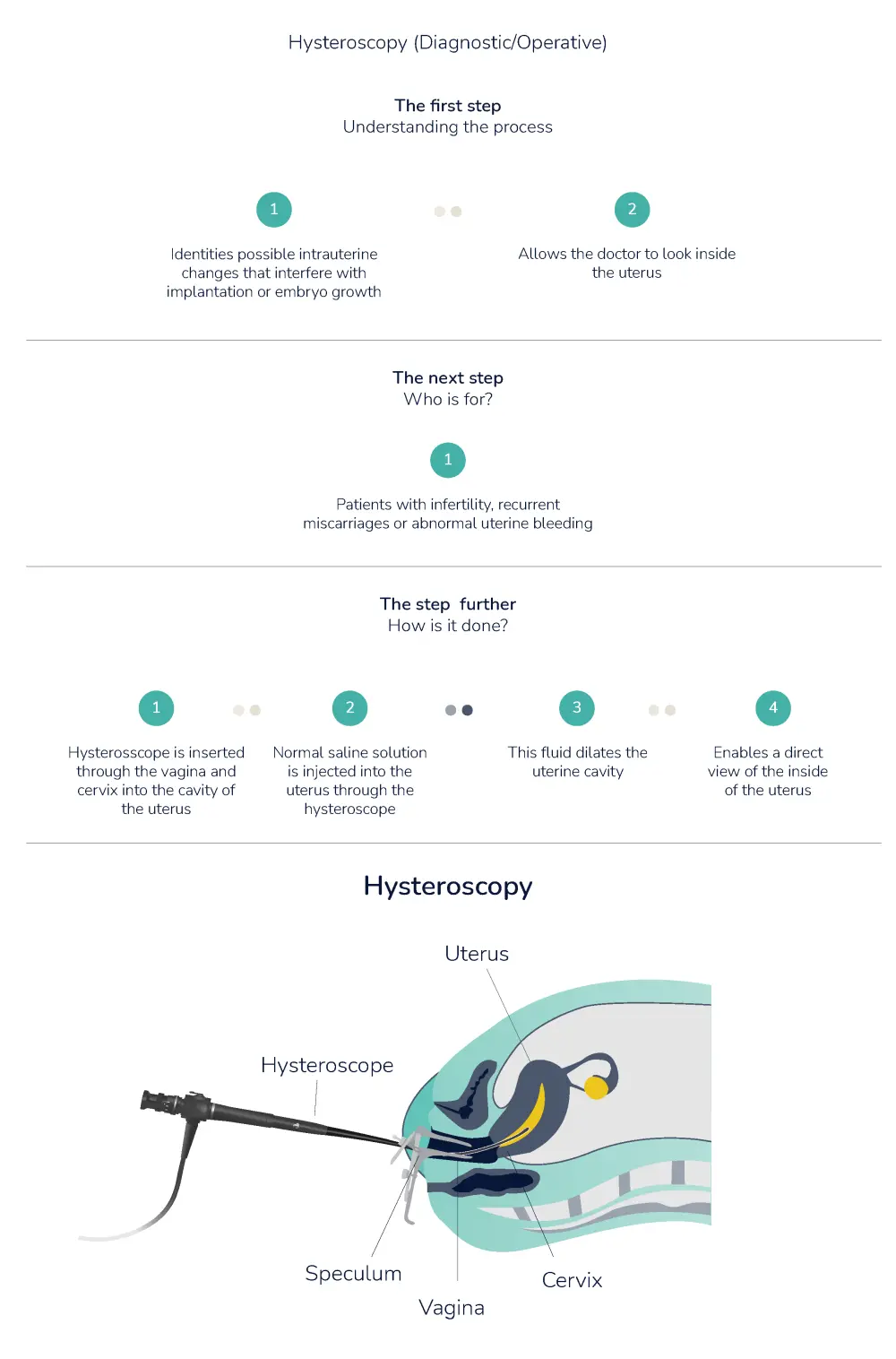
What is diagnostic hysteroscopy?
Diagnostic hysteroscopy helps to diagnose problems in the uterus. It is also used to confirm the results of other tests, including hysterosalpingography (HSG).
What is operative hysteroscopy?
Operative hysteroscopy refers to the procedure that corrects an abnormal condition detected during diagnostic hysteroscopy. During diagnostic hysteroscopy, if any abnormal condition is detected, it can be corrected by performing an operative hysteroscopy at the same time.
What are the risks of hysteroscopy?
Typically, hysteroscopy is a safe procedure. However, there is a small risk of complications. The main risks associated with hysteroscopy are
- Accidental damage to the womb
- Accidental damage to the cervix
- Excessive bleeding during or after surgery
- Infection of the womb
- Problem-related to anesthesia
What is the role of hysteroscopy in infertility?
Hysteroscopy plays a vital role in infertility investigations. It identifies possible intrauterine changes that interfere with implantation and/or embryo growth. It also evaluates various treatment methods in restoring a typical endometrial environment. Compared to hysterosalpingogram (HSG) and transvaginal ultrasonography, hysteroscopy can accurately diagnose certain abnormalities.
Hysteroscopy identifies the presence of extra growth-like lesions such as uterine fibroids, endometrial polyps, intrauterine adhesions, which are known causes of infertility as they interfere with proper embryo implantation and growth. Vaginal ultrasound helps infertility assessment but fails to detect these abnormalities. Due to its advantages, hysteroscopy has been identified as a definite method to examine, evaluate, assess the uterine cavity, and diagnose any associated abnormalities. It allows complete, accurate identification of intrauterine abnormalities that might negatively affect endometrial receptivity and implantation. Moreover, a diagnostic hysteroscopy prior to an IVF treatment might improve the implantation and the success rate.