


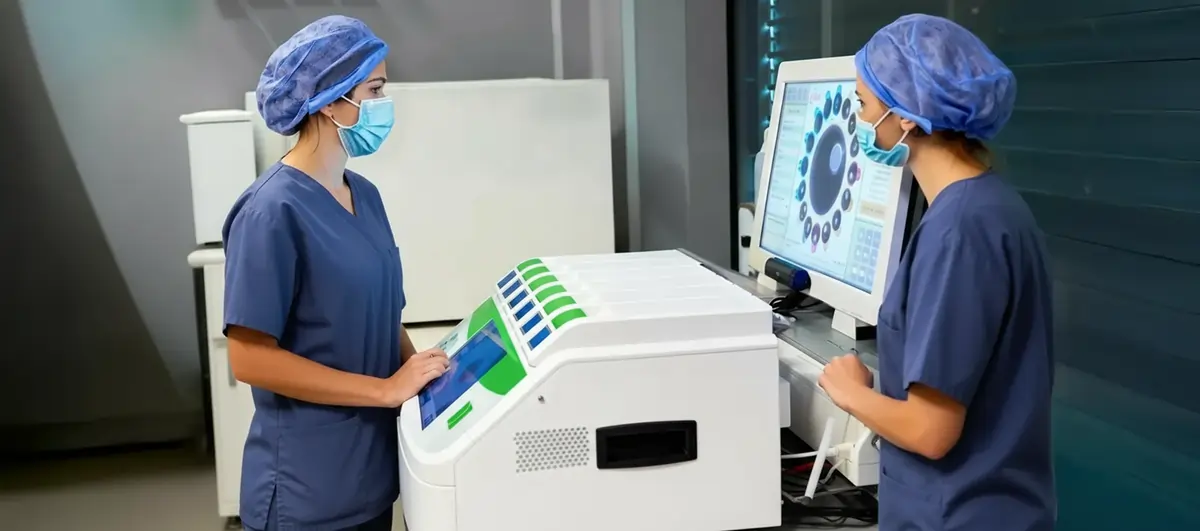
Time-lapse incubators involve a novel technique that allows detailed analysis of embryo development and helps select the best embryo for transfer. These incubators use time-lapse image analysis for embryo grading and selection.
What is the difference between traditional incubators and time-lapse incubators?
During traditional embryo grading, a microscope is used to observe the embryo stage and quality at set times only. The embryo is taken out of the traditional incubator at regular intervals after fertilisation, generally every 24 hours. The visual appearance of embryos is observed under the microscope, including the number of cells, symmetry of cells and degree of cell fragments. The repeated removal and replacement of embryo, in and out of the incubator leads to repeated changes in temperature, pH, air content etc which can be detrimental to the embryos.
With time-lapse incubators, a digital time-lapse camera is mounted on top of each embryo, in an incubator with a controlled environment. The camera records images of each embryo, generally every 5-15 minutes. This allows the embryologist to continuously monitor the embryo development, without having to remove the embryo from the incubator at all. Time-lapse incubators allow assessing the embryos continuously, giving a lot more information, rather than a snapshot every 24 hours. It also provides the embryos with the most stable environment to grow.
The Takeaway
Selecting the best embryos is one of the critical factors contributing to a successful live birth. Time-lapse incubators allow a better way of selecting the best embryos, compared to traditional embryo grading. They may therefore provide a higher success rate in comparison.
Please ask for more information from our doctors at ART Fertility Clinics.
Frequently Asked Questions
-
How is this different from a traditional incubator?
Traditional incubators require embryos to be removed for periodic checks, which can disturb their environment. Time-lapse incubators continuously monitor embryo development using a camera without removing embryos, maintain stable temperature and conditions, and provide more detailed information.
-
Does the camera or light harm the embryos?
No, the camera and light used in time-lapse incubators are safe for embryos. They are designed specifically for embryo monitoring and do not generate harmful heat or radiation that could affect embryo development.
-
Can it detect chromosomal abnormalities?
Time-lapse incubators cannot directly detect chromosomal abnormalities. They help assess embryo development patterns and quality, but genetic testing, such as PGT, is required to accurately identify chromosomal abnormalities.
-
Will I get to see the video of my embryos?
In many clinics, patients may be shown images or videos from the time-lapse system, depending on clinic policy. The primary purpose of the video is to help embryologists select the best embryo.
-
Who should consider using a Time-Lapse Incubator?
Time-lapse incubators may appeal to patients who want more detailed, continuous embryo monitoring and additional data for embryo selection discussions, including those with prior unexplained IVF failures.